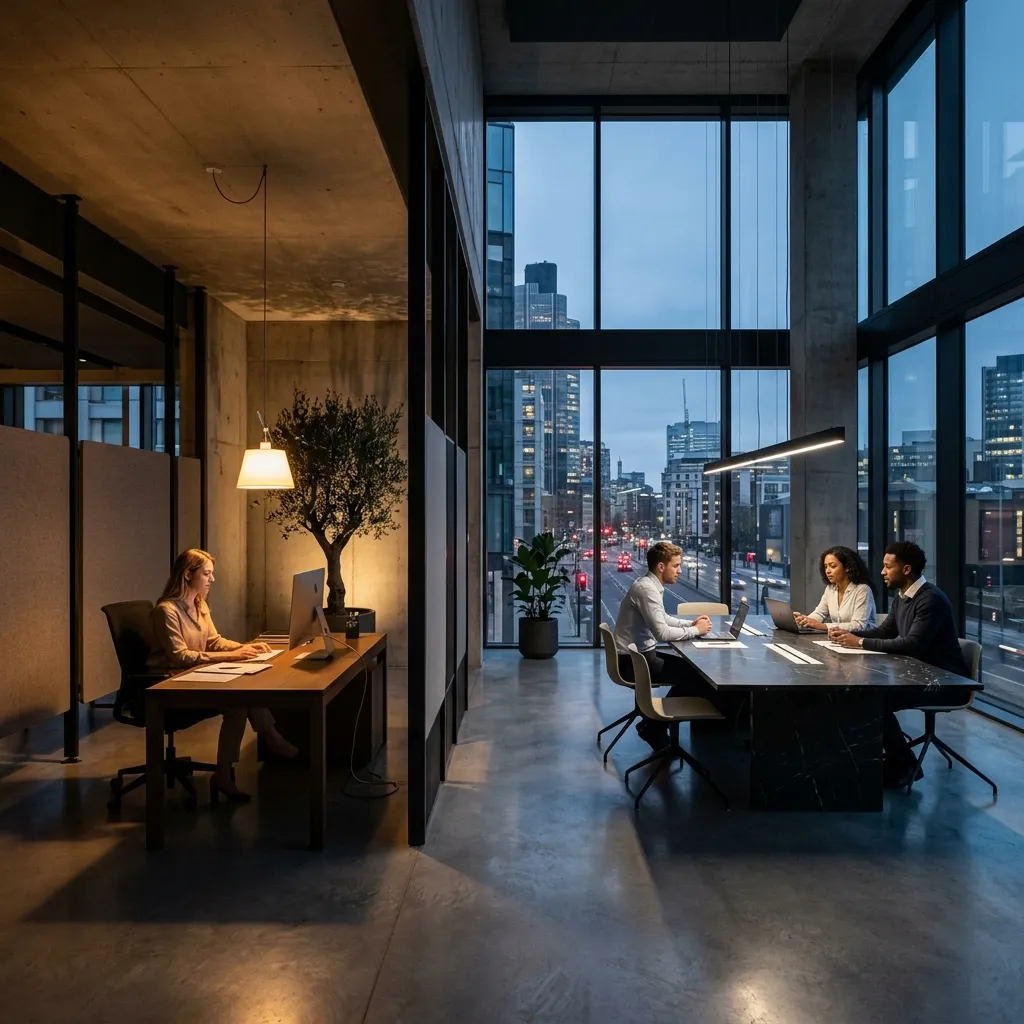
Let's be honest about our daily routines: most of us spend upwards of 90% of our waking hours indoors, sitting under artificial lights in office buildings. For decades, we've accepted static, unchanging fluorescent light as the standard. But biologically speaking, our bodies aren't built for that. This constant, unwavering light actually disrupts our natural circadian rhythms, leading to the mid-afternoon slump, eye strain, and poor sleep when we finally get home.
Enter Human Centric Lighting (HCL)
Human Centric Lighting is fundamentally changing the way we illuminate workspaces. Instead of a 'one-size-fits-all' brightness, HCL systems dynamically shift both their color temperature and intensity as the day progresses. The goal? To perfectly mimic the natural arc of the sun.
Imagine walking into the office at 8:00 AM. The lights are bright and slightly cool—around 5000K to 6000K. This suppresses melatonin and signals to your brain that it's time to be alert and focused. As the day transitions into late afternoon, the lighting gradually warms up to a softer, cozier 3000K, helping your body naturally prepare to wind down for the evening.
"We are finally designing lighting for the humans inside the building, not just the desks they sit at."
The ROI of Employee Wellbeing
For business owners and facility managers, HCL is far more than just a wellness trend—it's a strategic investment. Recent studies have consistently shown that offices utilizing tunable white LED systems report noticeable reductions in employee absenteeism and measurable improvements in cognitive performance and task accuracy.
Investing in your team's environment pays dividends. Contact us to learn how an HCL retrofit can transform your office culture and productivity.